

Estimated reading time: 16 minutes
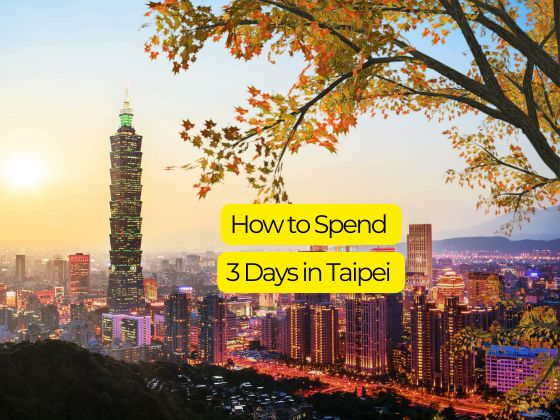
Planning 3 days in Taipei can feel a bit confusing at first because there’s a lot you could do, but not everything is worth squeezing in. The city has a mix of great food, easy-to-explore neighbourhoods, temples, viewpoints, and a few popular day trips nearby. The challenge isn’t finding things to do, it’s figuring out what to prioritise without turning your trip into a packed schedule.
This guide focuses on a simple, well-paced plan so you can see the highlights, eat really well, and still have time to enjoy the city without rushing from one place to another.
If you’re planning 3 days in Taipei, here’s how you do it.
Quick Clarity: How to Spend 3 Days in Taipei
If you’re searching for how to spend 3 days in Taipei, you’re probably trying to figure out one thing: how to plan it well without overcomplicating it.
You don’t need 10 different itinerary options. You just need one plan that feels balanced and realistic.
Three days in Taipei is actually a really good amount of time for a first visit. You can see the main highlights, eat your way through the city properly, and still not feel rushed every single hour.
What you’re trying to balance here is quite simple:
- The big first-time spots like Taipei 101
- The food scene, which is honestly a huge part of the experience
- A bit of culture so it doesn’t feel like you only saw the surface
- Some modern Taipei, like cafés and neighbourhoods
- And possibly one easy day trip, if you feel like stepping out
Here’s a structure that works really well:
- Day 1: Old + New Taipei
This is your introduction to the city. You’ll see the skyline, visit a temple, and end the day at a night market. - Day 2: Culture + neighbourhoods + food
Today you’ll see some history, spend time in good neighbourhoods, and eat really well. - Day 3: Day trip or slow Taipei
This depends on how you like to travel. If you want to see something outside the city, you can do Jiufen and Shifen. If you prefer staying in one place and exploring it properly, spending another day in Taipei is just as rewarding.
If you follow this structure, your trip will feel well-paced, and you won’t come back feeling like you missed something important.
Day 1: Temples, Elephant Mountain and Raohe Night Market
Start your day with breakfast at Fu Hang Soy Milk
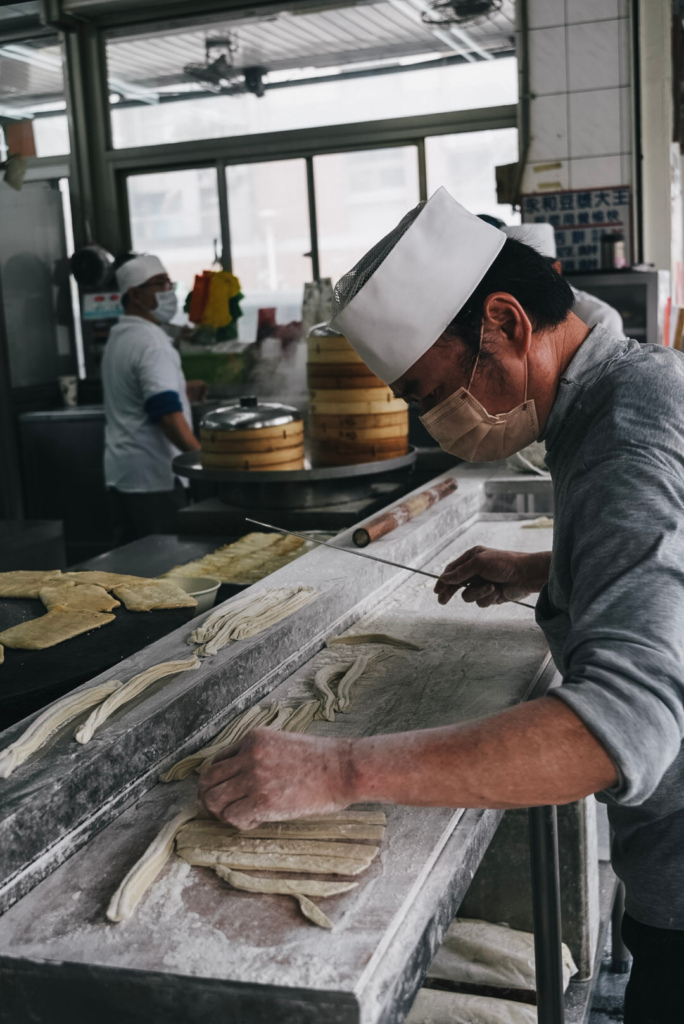
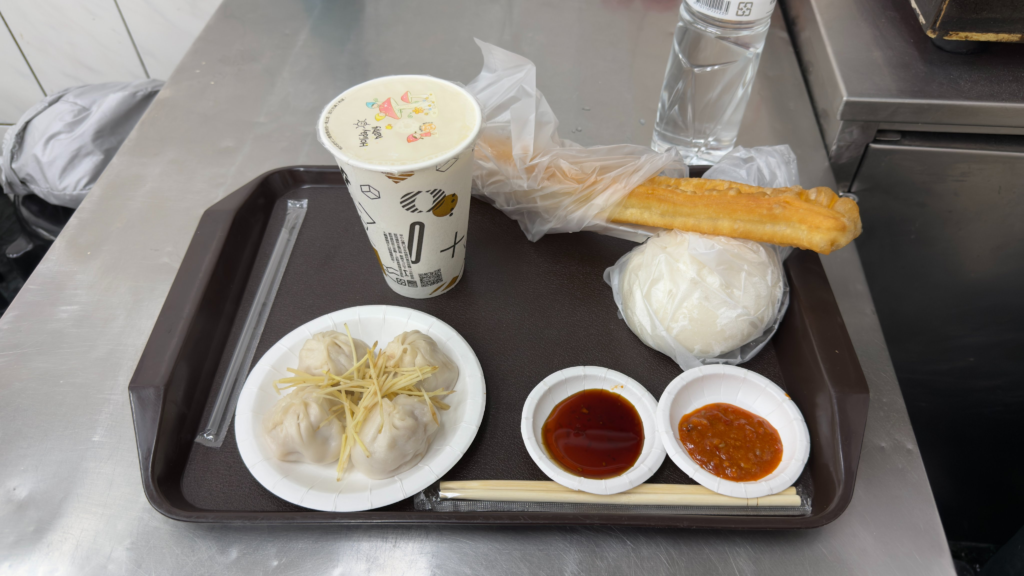
Begin your morning at Fu Hang Soy Milk, one of Taipei’s most famous breakfast spots. It’s located inside Huashan Market, and there’s almost always a queue. Don’t let that put you off. It moves quickly, and it’s part of the experience.
This is a very local, very no-frills kind of place. You’ll see office-goers, students, and travellers all waiting for the same thing.
What to try:
- Fresh soy milk (hot or cold)
- Shaobing (crispy flatbread) with egg
- You tiao (fried dough stick)
The flavours are simple but done really well. It’s a great way to start your day, eating what locals actually eat, not a toned-down version for tourists.
Head to Longshan Temple in Wanhua
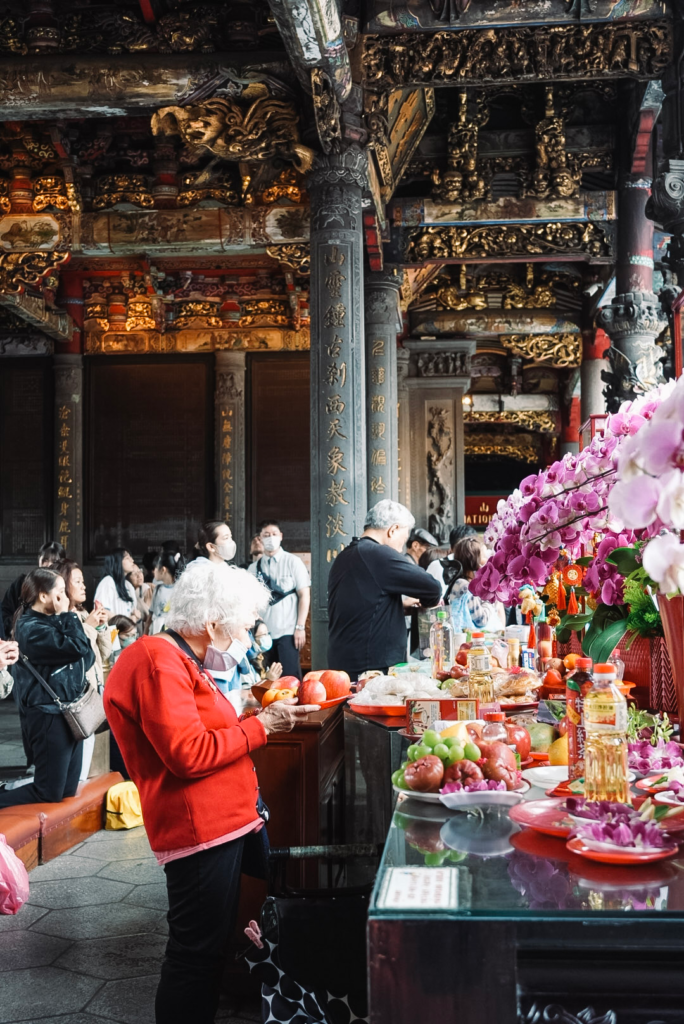
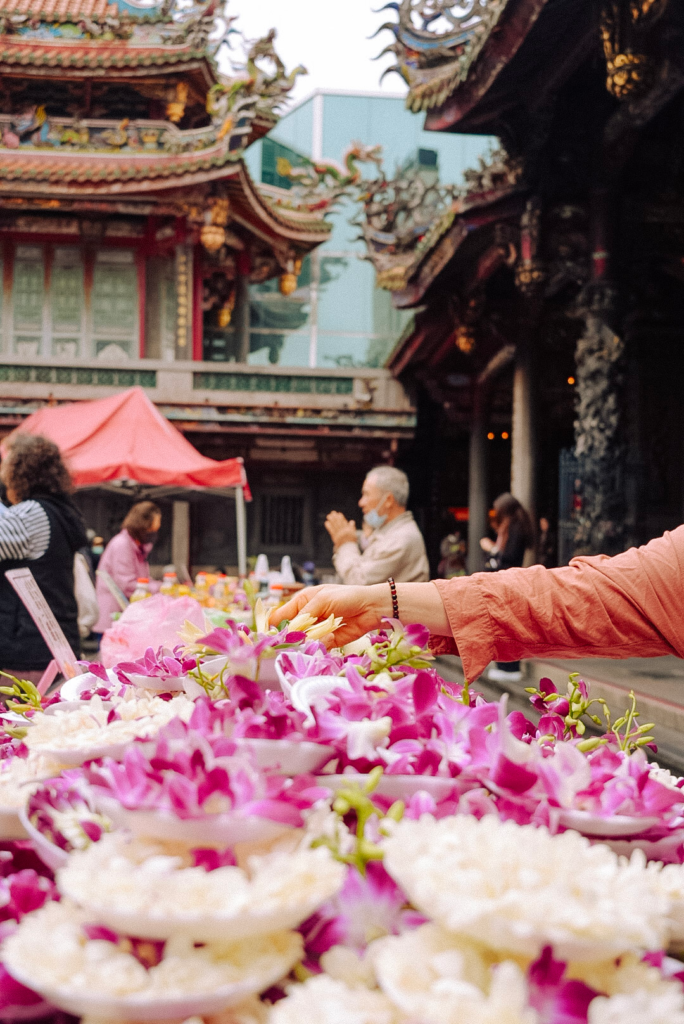
After breakfast, make your way to Longshan Temple in the Wanhua district, one of the oldest parts of Taipei.
This temple dates back to the 18th century and has survived earthquakes, fires, and even bombings during World War II. What you see today is a restored version, but the atmosphere still feels deeply rooted in history.
If you’ve started collecting travel stamps (and Taiwan is great for this), you’ll find one here as well. Step outside and walk around the surrounding streets for a bit.
Chiang Kai-shek Memorial Hall
From Longshan Temple, head towards Chiang Kai-shek Memorial Hall, one of Taipei’s most recognisable landmarks.
The space here is massive. Wide open squares, grand staircases, and a very symmetrical layout. It feels quite different from the dense streets you just walked through.
The memorial was built in honour of Chiang Kai-shek, a former president of the Republic of China. Whether or not you’re deeply interested in the history, the place is still worth visiting.
If you’re collecting stamps, there are a few here as well, so keep an eye out. On your way to the memorial, the Presidential Office Building, which serves as Taiwan’s parliament and administrative centre. You can’t enter freely, but it’s interesting to spot as you pass through the area.
Sunset at Elephant Mountain
Keep your afternoon relatively light because you’ll want some energy for the evening.
Just before sunset, make your way to Elephant Mountain.
The hike starts off with a steep staircase, and it does get a bit intense in parts, but it’s short. With a few breaks, it took me around 40 minutes to reach the main viewpoint. Most people I know took anywhere between 30 and 60 minutes, depending on pace and how often they stopped.
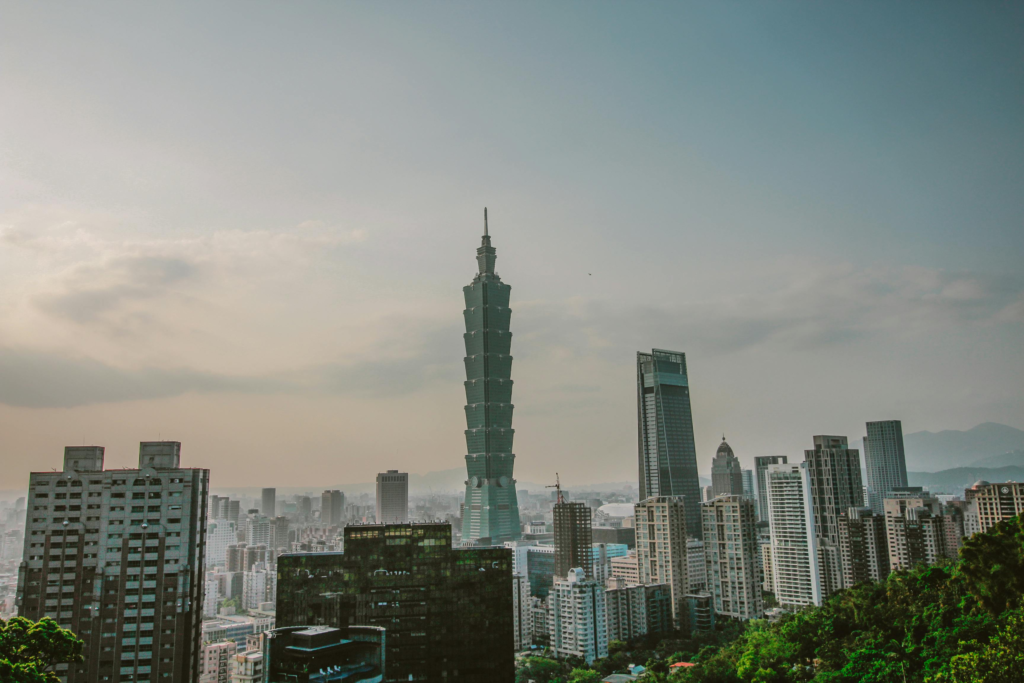
Once you reach the top, you’ll get a clear view of Taipei 101 and the surrounding skyline. If the weather is clear, this is easily one of the best viewpoints in the city.
In my opinion, this is why you can skip the Taipei 101 observation deck. The view from Elephant Mountain is far better.
Dinner at Raohe Night Market
End your day at Raohe Night Market, which is one of the best places to experience Taipei’s street food scene without feeling overwhelmed. The market is crowded, but not nearly as crowded as some of the others I visited in Taipei.
It’s a single long street, so it’s easy to navigate, especially on your first night.
The one thing you should not miss here is the pepper pork bun from Fuzhou Black Pepper Bun, which has a Michelin Bib Gourmand mention. You’ll spot the stall because of the crowd and the clay oven where they bake the buns fresh.
Apart from that, walk around and try what catches your eye. Some popular options include:
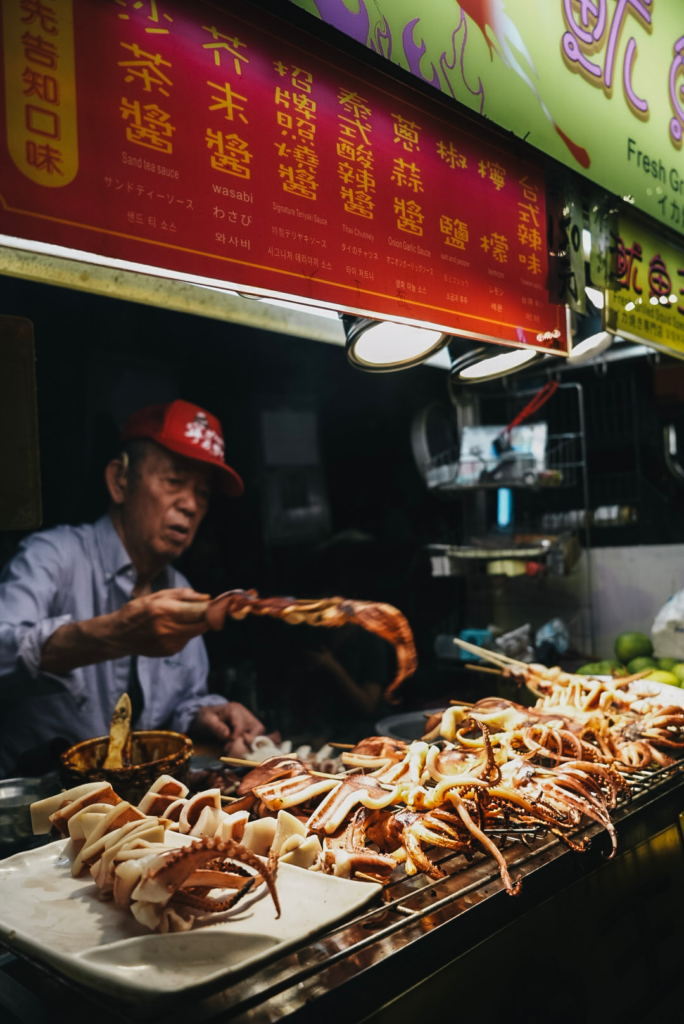
- Grilled squid
- Fried chicken cutlets
- Bubble tea
- Sweet potato balls
There’s also a mix of small stalls selling clothes, accessories, and random knick-knacks, so it’s not just about food.
Day 2: Neighbourhoods, Cafés, Dihua Street & Ningxia Night Market
Start your day in Daan District
Head to Yong He Soy Milk King for breakfast. It’s a classic Taiwanese breakfast spot. Slightly chaotic, very local, and exactly the kind of place you want to experience at least once.
What to order:
- Soy milk (sweet or savoury)
- Egg pancakes (dan bing)
- Xiaolongbao
Don’t expect a slow, sit-down café vibe. This is quick, efficient, and full of regulars who know exactly what they’re ordering.
After breakfast, spend some time walking through Daan District.
This is one of the nicest areas to explore in Taipei. It’s clean, leafy, and has a mix of boutiques, cafés, and quieter streets.
Things to do here:
- Walk through small lanes instead of sticking to main roads
- Stop at independent cafés (there are plenty, and most are genuinely good)
- Browse local boutiques and concept stores
If you want a quick green break, Daan Forest Park is nearby. It’s simple, but a nice spot to slow down for a bit.
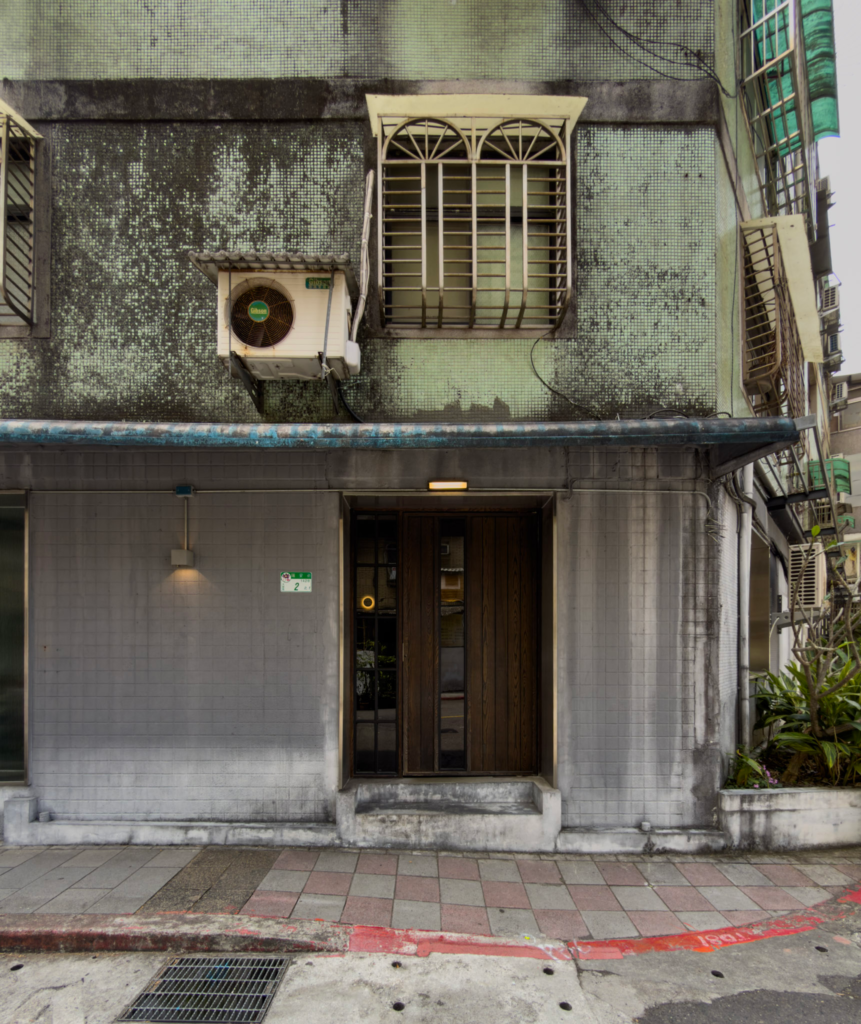
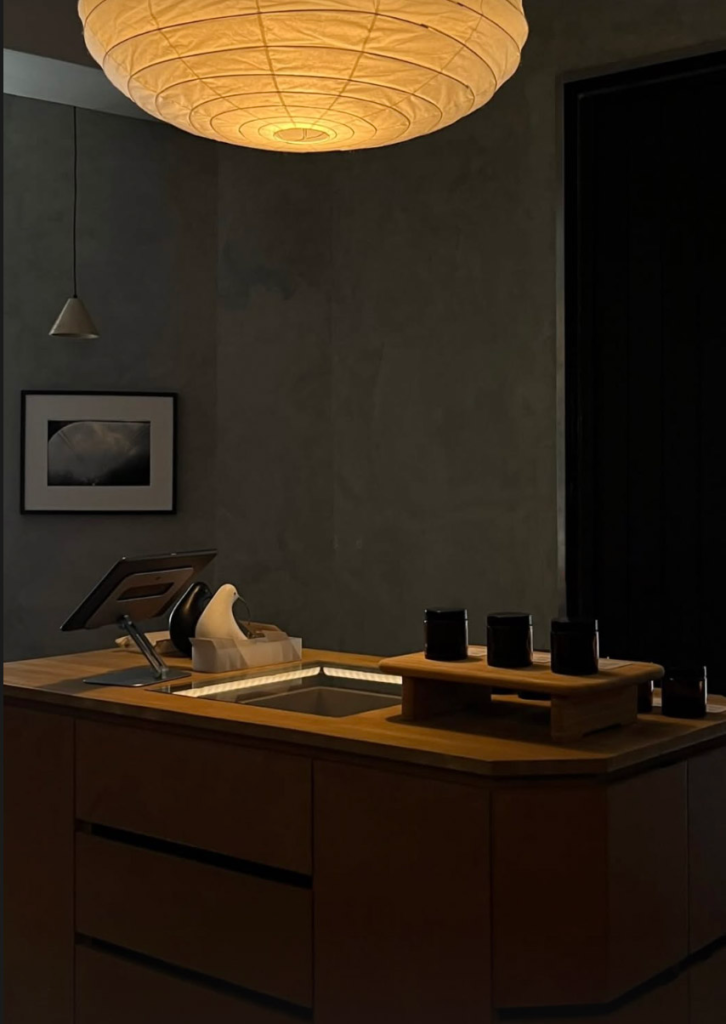
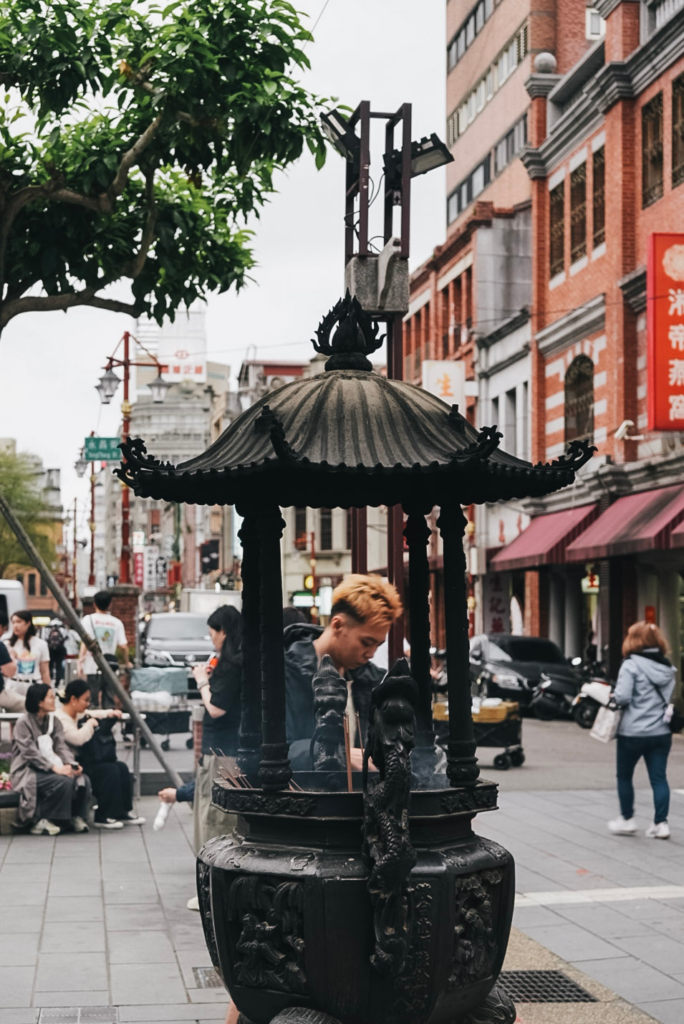
Shopping at Yongkang Street
From Daan, make your way to Yongkang Street, which is one of the best areas in Taipei for a mix of food and shopping.
The street is lined with small restaurants, dessert shops, local boutiques and Souvenir stores.
Make sure you pick up nougat crackers from L’Atelier Lotus. They’re one of those things that sound simple but are surprisingly addictive. If you’re carrying gifts back home, this is an easy win. You can also try Mango shaved ice (if you’re visiting in the right season). A good spot for stationery as well, my favour shops were <> insert names
Huashan Creative Park or Songshan Cultural Park
At this point, you have two options. You can head to Huashan Creative Park or Songshan Cultural Park, both of which are repurposed industrial spaces turned into creative hubs.
Between the two, Huashan feels a bit more raw and artsy, while Songshan is more structured and polished. That said, this stop is completely optional.
Alternative (and highly recommended) visit Datong Neighbourhood
If you’d rather explore something that feels a bit more local and less curated, spend your afternoon in Datong. This was easily one of my favourite parts of Taipei.
The area has heritage stores that have been around for decades. Loads of small independent fashion labels and hidden cafés tucked in the alleyways.
If you’re into fashion or design, this is where things get interesting. Also, if you’ve been collecting travel stamps, this area has plenty of them. Many of the older stores keep stamps, and it turns into a bit of a treasure hunt as you walk around.
Dihua Street
From Datong, head towards Dihua Street, which is one of the oldest and most atmospheric streets in Taipei. This place has a very distinct character. On one hand, it’s a functioning market where locals shop for herbs and traditional Chinese medicine.
On the other hand, it feels thoughtfully restored, with old buildings housing modern stores and cafés. It’s busy, slightly chaotic in parts, but still very walkable.
If you’re interested in traditional Chinese medicine or herbal products, this is one of the best places to explore. Even locals come here to shop, which tells you a lot. For photography, the side alleys and older shopfronts are worth paying attention to. There’s a lot happening in small details.
Dinner at Ningxia Night Market
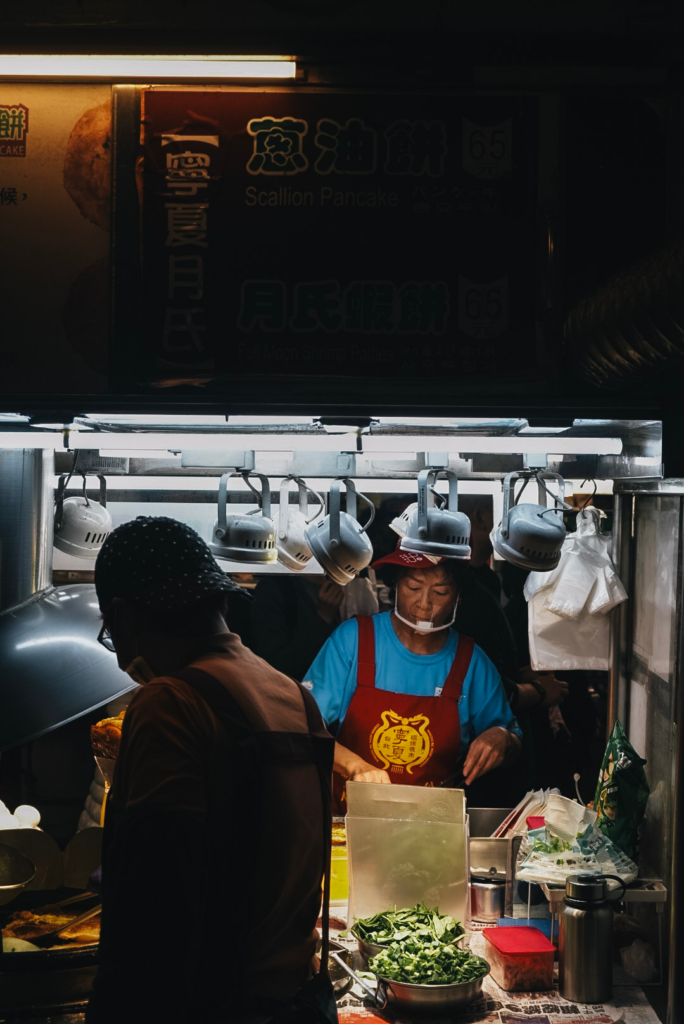
End your day at Ningxia Night Market, which is my personal favourite in Taipei.
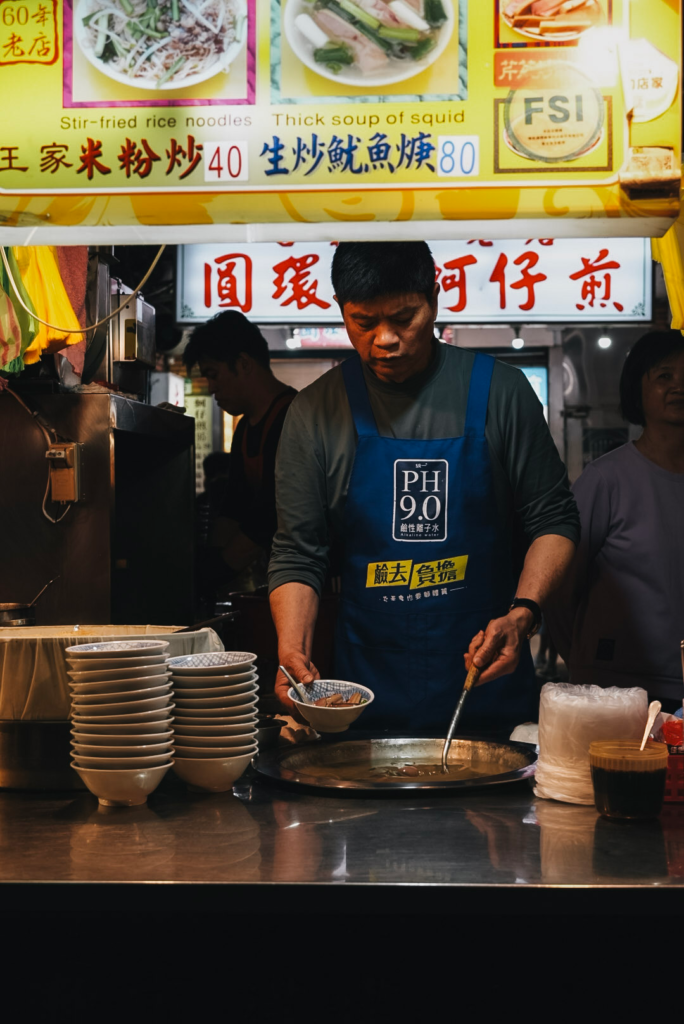
It’s much narrower compared to others, and that changes the experience completely. There’s no distraction here. The focus is entirely on food. Walk through once before you decide what to eat.
Some things to try:
- Scallion pancakes (some of the best I had in Taipei were here)
- Oyster omelette
- Stinky tofu (even if just to try it once)
- Fresh fruit juices
- Sweet desserts like taro balls or mochi
You’ll notice that people here take their food seriously. Many stalls specialise in just one or two dishes, and they’ve been doing it for years.
Day 3: Jiufen, Shifen & an Evening in Ximending
Day trip to Jiufen
Start your day early and make your way to Jiufen, a small mountain town about an hour from Taipei.
There are a few ways to get to Jiufen from Taipei
- Train to Ruifang + taxi/bus to Jiufen
- Direct bus from Taipei
- Guided tour (easiest if you don’t want to think about logistics)
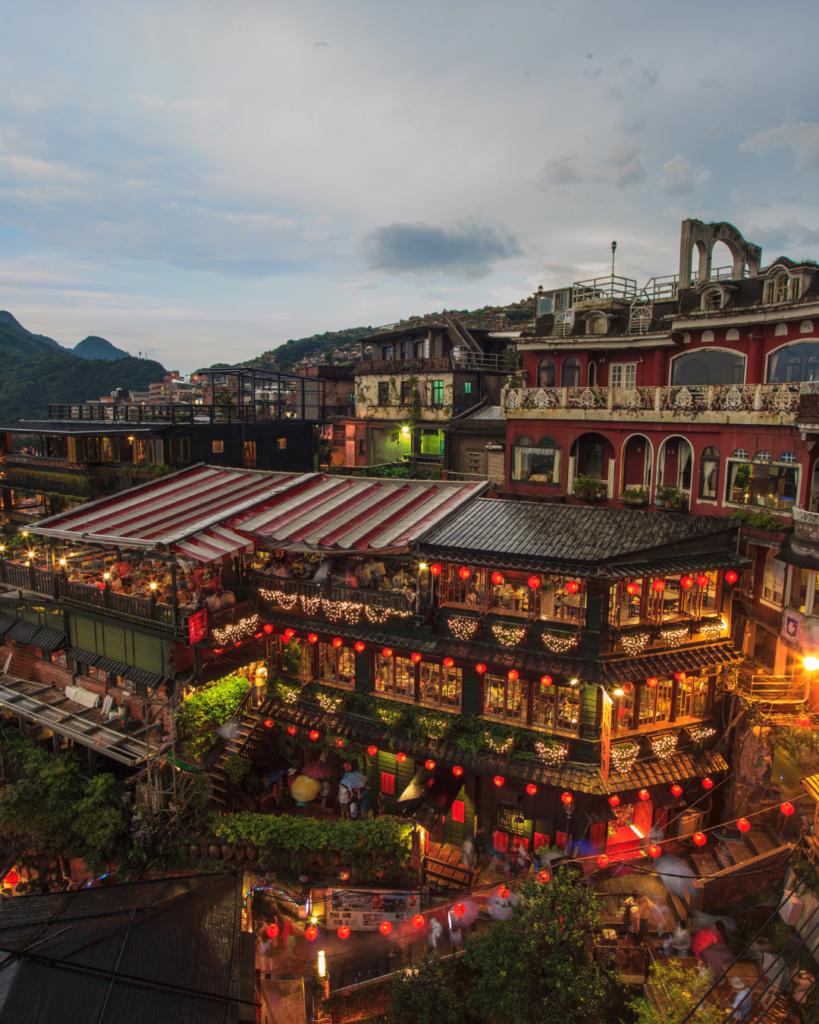
Jiufen is known for its narrow lanes, old tea houses, and views over the coastline. It gets busy, so arriving earlier in the day helps you enjoy it without constantly navigating crowds.
Walk through the main old street, but also take a few smaller lanes. That’s where it feels quieter and more interesting.
Things to do in Jiufen:
- Stop at a traditional tea house for a slow break
- Try local snacks like taro balls or peanut ice cream rolls
- Walk up to viewpoints overlooking the sea
Jiufen is often compared to scenes from Spirited Away, and while that’s a bit romanticised, the atmosphere in parts of the town does feel quite cinematic. A more detailed guide on how to do a day trip to Jiufen from Taipei will be on the blog soon.
Head to Shifen
From Jiufen, continue towards Shifen, which is part of the Pingxi railway line.
Shifen is known for two main things. The waterfall and the sky lantern experience
Start with Shifen Waterfall. It’s about a 15–20 minute walk from the main area and is often called Taiwan’s “Niagara Falls.” It’s not massive, but it’s scenic and easy to access.
Then head back towards the railway tracks, where the main activity happens.
This is where people release sky lanterns with wishes written on them. Yes, it’s touristy. But it’s also one of those things that you’ll probably still enjoy doing once.
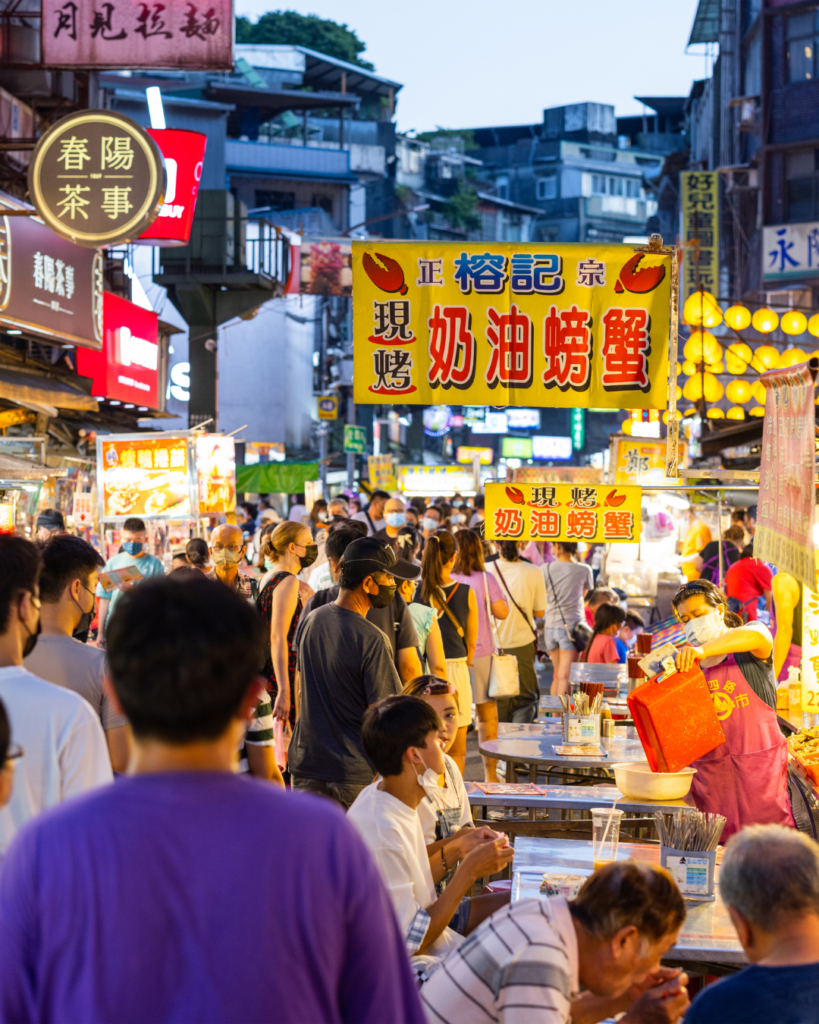
You’ll see shops right along the tracks, and trains passing through slowly while people move aside. It feels slightly chaotic but very organised at the same time.
Head back to Taipei
By late afternoon, start making your way back to Taipei.
If you’ve booked a guided tour, this is usually taken care of. If you’re doing it yourself, give yourself enough buffer time for trains and transfers.
You’ll likely reach Taipei by early evening, which is perfect timing for your last night in the city.
An Evening in Ximending
Spend your final evening in Ximending, one of Taipei’s liveliest neighbourhoods.
This area has a completely different energy compared to the rest of your trip. You’ll find street performers, big branded stores with the right signs and busy lanes. It’s a good place to walk around without a fixed plan. You can shop, snack, or just people-watch for a bit.
If you still have room for food (which is optimistic but possible), you’ll find plenty of options. You can also pick up last-minute souvenirs here. It’s more commercial than places like Dihua Street, but it’s convenient and has variety.

Planning a trip to Taiwan?
Let’s make a custom Itinerary for you.
Getting Around Taipei (Transport Guide for First-Time Visitors)
Getting around Taipei is honestly one of the easiest parts of planning your trip. The city is extremely well-connected, signage is clear (with English everywhere), and you don’t need to spend time figuring out complicated routes.
MRT (Taipei Metro): Your Main Mode of Transport
The MRT in Taipei is clean, efficient, and covers almost all major attractions.
Trains are frequent, easy to navigate, and very punctual. Even during peak hours, it feels organised. If you’re visiting Taipei for 3 days, you’ll rely on the MRT a lot, and it works really well for short distances as well as longer cross-city travel.
Get an EasyCard (Highly Recommended)
The first thing you should do when you land is pick up an EasyCard.
This is a prepaid travel card that you can use for:
- MRT rides
- Buses
- Convenience stores
- Some taxis
It saves you from buying individual tickets every time and makes everything quicker.
You can top it up at:
- MRT stations
- 7-Eleven / FamilyMart
For a 3-day Taipei trip, this is the simplest and most convenient option.
Uber and Taxis
If you don’t feel like navigating public transport at any point, Uber works very well in Taipei. Another local app, which ends up being a couple of NTDs cheaper than Uber, is 55688. Regular taxis are also reliable, but Uber/55688 is usually more straightforward if you don’t want to deal with language barriers.
Do You Need to Rent a Car?
The short answer is no. You do not need a car in Taipei. Traffic can get busy, parking is not always easy, and public transport already does the job efficiently. Even for day trips like Jiufen and Shifen, it’s easier to use public transport or book a tour instead of driving yourself.
Final Take on Getting Around Taipei
Between the MRT, EasyCard, and occasional Uber rides, getting around Taipei is smooth and stress-free. You won’t need to plan transport in detail, and that makes a big difference when you’re trying to enjoy the city.
Cost of 3 Days in Taipei (Realistic Breakdown)
One of the most common questions I get is: How expensive is Taipei really?
The honest answer is that it sits somewhere in the middle. It’s not as cheap as Vietnam or Thailand, but it’s also nowhere close to Japan or Europe. What you get in return is a very easy, clean, and well-organised travel experience.
Here’s what a realistic 3-day Taipei budget looks like, especially if you’re travelling from India.
Cost of Accommodation (Per Night) in Taipei
Taipei has a wide range of stay options, and your cost will largely depend on the area you choose and also the season you travel in.
- Budget hostels: ₹3,500 – ₹6,000
- Mid-range hotels (most popular): ₹9,000 – ₹12,000
- Boutique/premium stays: ₹18,000 – ₹20,000+
A detailed blog on where to stay in Taipei will be up soon.
Cost of Food (Per Day) in Taipei
Food is one of the best parts of Taipei, and thankfully, it doesn’t have to be expensive.
- Local meals / night markets: ₹300 – ₹800 per meal
- Cafés / casual dining: ₹800 – ₹1,500
- Nicer restaurants: ₹1,500 – ₹3,000
- Bubble tea: ₹150 – ₹300
If you mix night markets with a few sit-down meals, a comfortable daily food budget is ₹800 – ₹2,000 per day
You can eat incredibly well here without spending too much.
Cost of Transport (Per Day) in Taipei
Transport in Taipei is very efficient and affordable.
- MRT rides: ₹50 – ₹150 per trip
- Daily average (with multiple rides): ₹300 – ₹700
- Uber (occasional use): ₹200 – ₹600 per ride
If you’re using an EasyCard and mixing in one or two Uber rides, about ₹300 – ₹700 per day is more than enough
Attractions & Activities (Total for 3 Days)
Taipei isn’t heavy on expensive attractions, which helps keep costs reasonable.
- Taipei 101 Observatory: ~₹1,500
- Museums / cultural sites: ₹200 – ₹800
- Jiufen / Shifen day trip: ₹1,500 – ₹3,500 (DIY vs tour)
So that brings your approximate total to ₹1,000 – ₹3,000 for the entire trip
Shopping & Extras
This depends entirely on you, but here’s a rough idea:
- Souvenirs (nougat, tea, small items): ₹1,000 – ₹3,000
- Clothing/boutiques: Variable
- Snacks, bubble tea, small spends: ₹300 – ₹800 per day
Total Cost for 3 Days in Taipei
Here’s a realistic overall estimate:
- Budget trip: ₹25,000 – ₹35,000
- Mid-range (most travellers): ₹35,000 – ₹60,000
- Comfort/premium: ₹60,000+
This excludes international flights. Travelling for more than 3 days? Here’s my trip budget calculator to help you get an approximate budget idea.