

Last updated after my March 2026 Taiwan trip. Opening hours fact-checked in July 2026.
If you are planning your first trip to Taipei, the night-market shortlist usually becomes a mess very quickly. Shilin is the famous one. Raohe is the one everyone insists is better. Ningxia is for serious food people. Then someone tells you the real answer is Nanjichang.
All of them are right. Slightly annoying, but true.
The best night market in Taipei depends on what you want from the evening. Do you want one long street where you cannot get lost? A compact market devoted almost entirely to food? Games and shopping for the family? Or old-school stalls where the menu may not be in English but dinner will cost less?
This guide compares eight of the best night markets in Taipei. I have included what each one does well, the nearest MRT station, realistic opening hours, foods to look for and the drawbacks worth knowing before you go.
If you only want the short answer, go to Raohe Street Night Market when you have one free evening. Choose Ningxia Night Market if food matters more than shopping. Visit Shilin Night Market for the full lights, games, shops and snacks experience. Pick Nanjichang Night Market when you want a more local dinner and do not mind travelling a little farther from the MRT.
In This Post
ToggleTaipei night markets at a glance
| Night Market | Best For | Nearest MRT | Hours | Allocate Time |
Raohe Street | Best overall and first visit | Songshan | 5:00 PM to midnight | 1.5 to 2 hours |
Ningxia | Traditional Taiwanese food | Shuanglian or Zhongshan | 5:00 PM to 11:30 PM | 1 to 1.5 hours |
Shilin | Variety, games, shopping and families | Jiantan | 4:00 PM to midnight | 2 to 3 hours |
Nanjichang (South Airport) | Local food and fewer tourists | Xiaonanmen or Longshan Temple, then walk/bus | 5:00 PM to midnight | 1.5 to 2 hours |
Linjiang (Tonghua) | A night market near Taipei 101 | Xinyi Anhe | 6:00 PM to midnight | 1 to 1.5 hours |
Gongguan | Student prices, casual food and cafés | Gongguan | 3:00 PM to 11:45 PM | 1.5 to 2 hours |
Huaxi, Guangzhou and Wuzhou | History and old Wanhua atmosphere | Longshan Temple | 4:00 PM to midnight | 1.5 to 2 hours |
Jingmei | Everyday neighbourhood atmosphere | Jingmei | 5:00 PM to midnight | 1 to 1.5 hours |
These are the official market hours available at the time of writing. A night market is made up of independent vendors, so individual stalls can open later, close earlier or take their own weekly day off. Typhoons, Lunar New Year and other public holidays can also change the schedule.
1. Raohe Street Night Market: the best night market in Taipei for a first visit
Raohe is my answer when someone asks which Taipei night market to choose if they have only one free evening. It is busy and absolutely not undiscovered, but it gets the important things right.
The market runs along one street for roughly 600 metres. You enter beside the elaborate Songshan Ciyou Temple, walk down one side, loop around and return along the other. There is no maze of unrelated lanes and no moment when you wonder whether you have accidentally left the market. This matters more than it sounds when you are hungry and moving through a crowd.
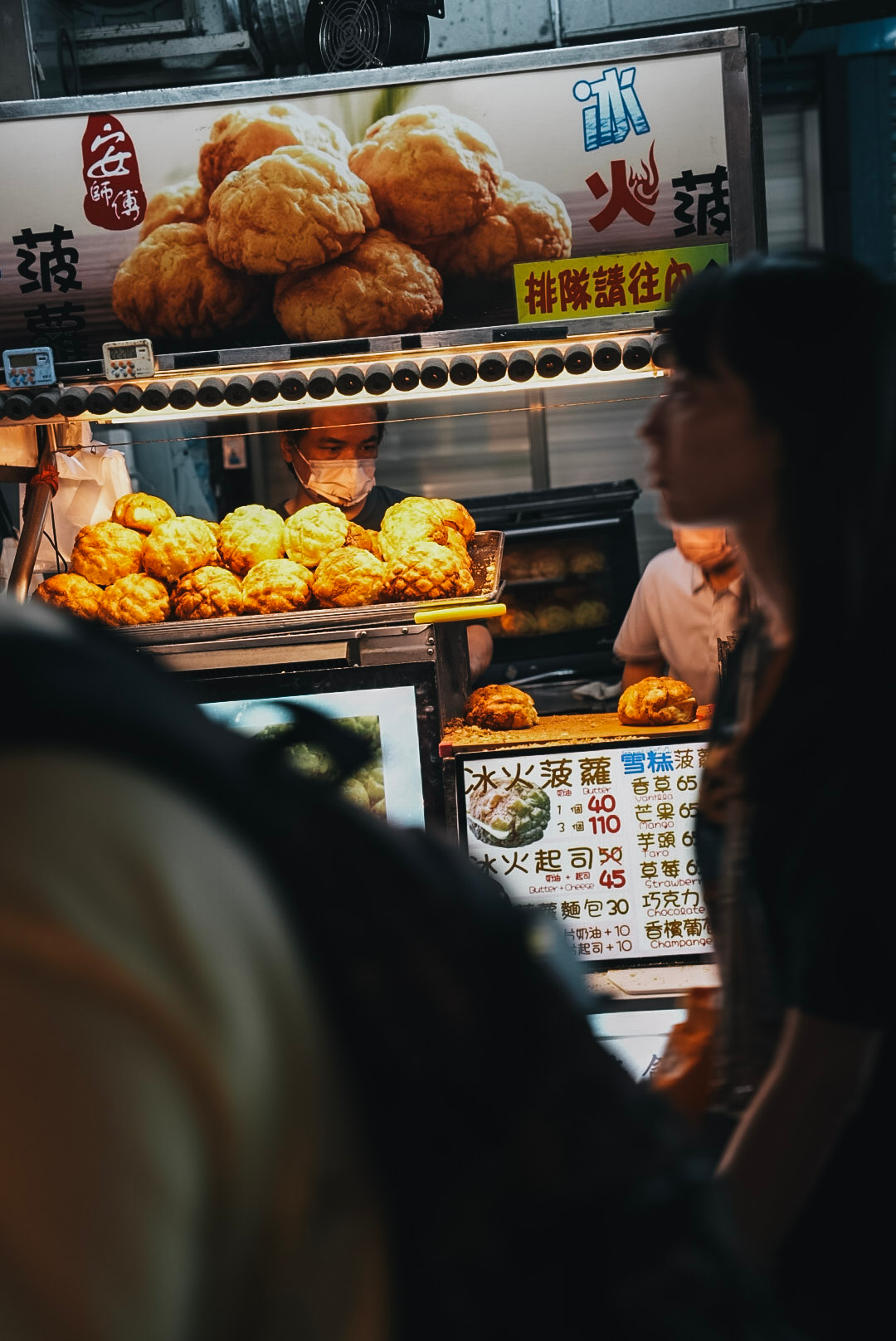
The famous queue just inside the eastern gate is for a black pepper bun, or hújiāo bǐng. The bun is stuck to the inside of a hot clay oven until the outside becomes crisp. Its filling is pork, scallions and plenty of black pepper, so vegetarians should not join the line on autopilot.
Other Raohe Night Market foods to look for include herbal pork-rib soup, stinky tofu, grilled squid, blowtorched beef cubes, sweet potato balls, mochi, hot-and-cold tangyuan and grilled king oyster mushrooms. If the crowd inside the market becomes too much, take your food towards Rainbow Bridge and the riverside area rather than trying to stop in the middle of the lane.
Make time for Ciyou Temple either before or after eating. It is not decorative scenery placed beside the market. It is an active Matsu temple and one of the reasons this part of Songshan developed as a trading area in the first place.
What Raohe does best: It gives you food, atmosphere, a beautiful temple and a simple walking route in one evening.
The drawback: The central lanes become extremely crowded between about 7:00 PM and 10:00 PM, especially on Fridays and Saturdays. A stroller here at peak time would test everyone involved.
2. Ningxia Night Market: the best Taipei night market for food
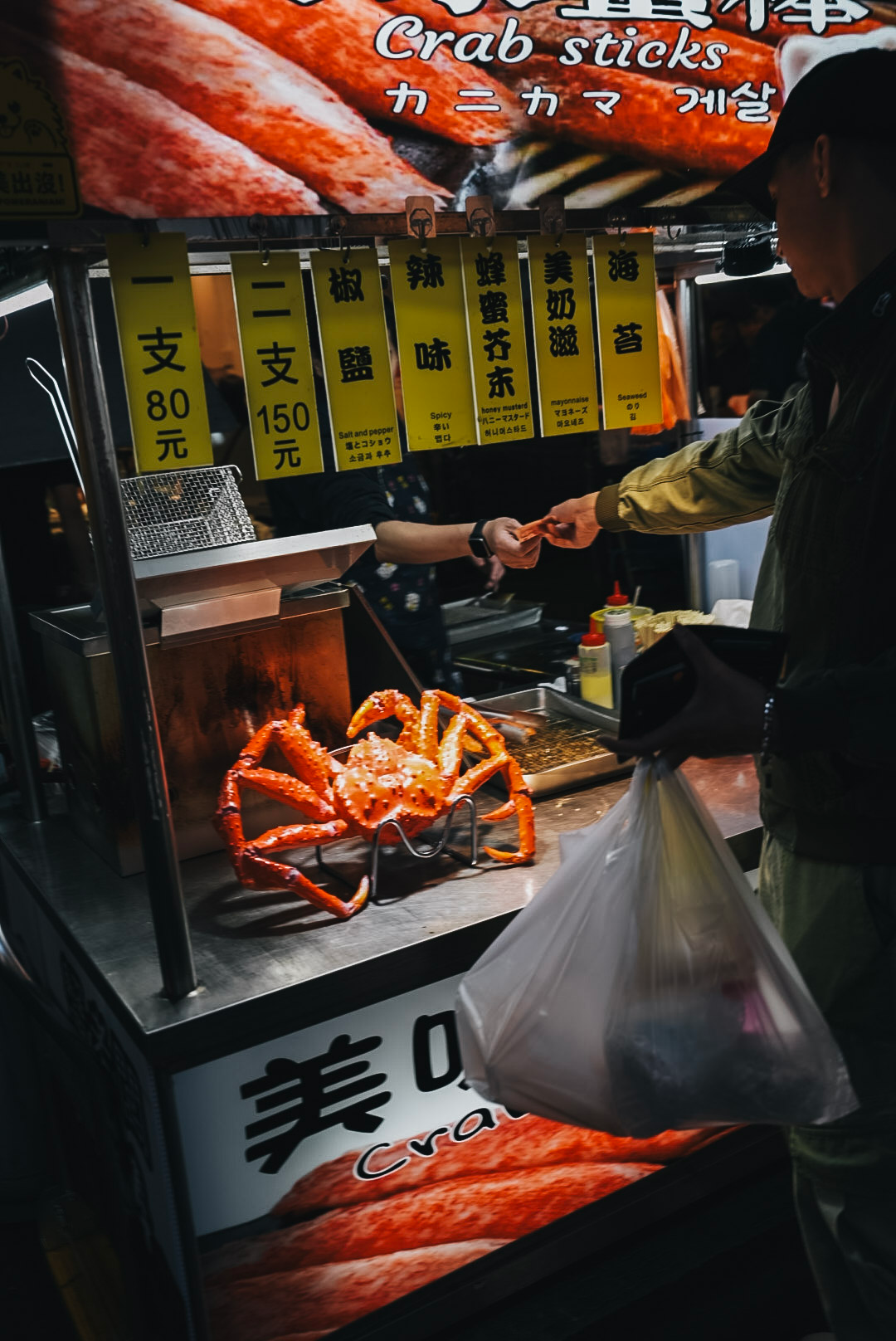
Ningxia is compact, central and unapologetically food-first. You will find a few games, but this is not where you come to buy phone cases, bargain for clothes or lose half an hour at a claw machine. You come for dinner.
Many stalls and small restaurants around Ningxia Road have been serving the same speciality for decades. Several have appeared in the Michelin Guide over the years, but the market does not feel like a collection of food awards. It feels like Taipei has compressed an unreasonable number of things to eat into one short street.
Start with the oyster omelette if you eat seafood. It combines small oysters, egg, greens and a chewy starch batter under a sweet-savoury sauce. Also look for sesame-oil chicken, braised pork rice, pork-liver soup, chicken rice and deep-fried taro balls. At the famous Liu Yu Zi stall, some taro balls contain salted egg yolk and pork floss. They are not vegetarian, despite their very innocent-looking taro exterior.
For dessert, try peanut candy wrapped around ice cream and coriander, mochi or a bowl of shaved ice. The peanut ice-cream roll sounds chaotic on paper. It makes much more sense once you eat it.
Ningxia works especially well after an afternoon on Dihua Street or in Dadaocheng. Walk through the old trading neighbourhood, stop for coffee around Chifeng Street or Zhongshan, and arrive at the market before the dinner rush.
What Ningxia does best: A high concentration of traditional food in a market small enough to cover in one evening.
The drawback: Small does not mean calm. The main food corridor is narrow and queues overlap when it gets busy. Go around 5:30 PM to 6:30 PM on a weekday if you want space to look before ordering.
3. Shilin Night Market: the biggest and most famous night market in Taipei
Let us get the most useful detail out of the way first. Use Jiantan Station, not Shilin Station. The market may be called Shilin, but Jiantan is the easier MRT stop for its main food and shopping streets.
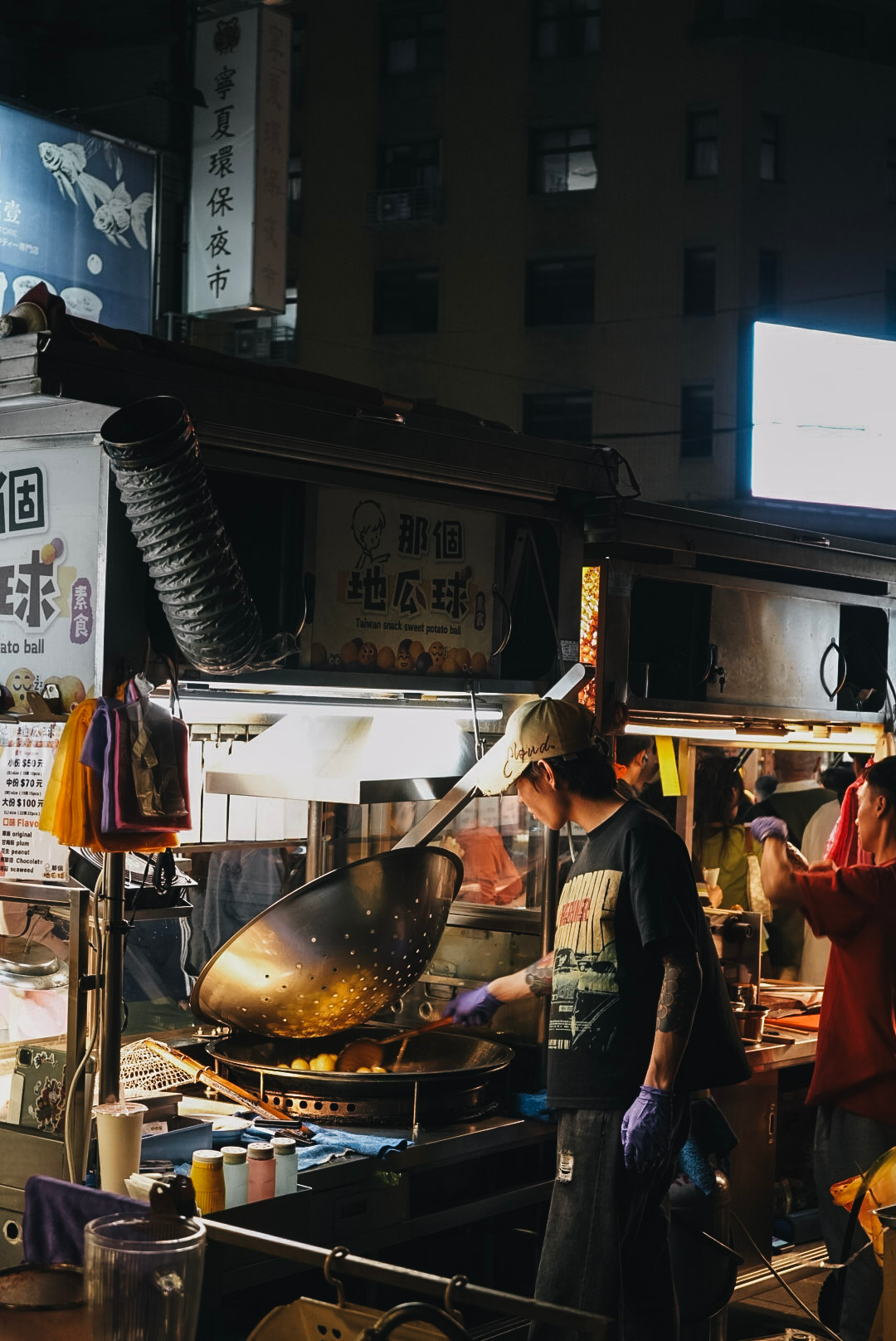
Shilin is not one neat road. It spreads across Danan Road, Dadong Road, Wenlin Road, Jihe Road and the smaller lanes around them. There are street stalls, permanent shops, game arcades, cinemas and an underground food court. The food court reopened after renovation in 2025, with improved ventilation and seating, which makes Shilin easier for families or anyone who does not want to eat every snack while standing.
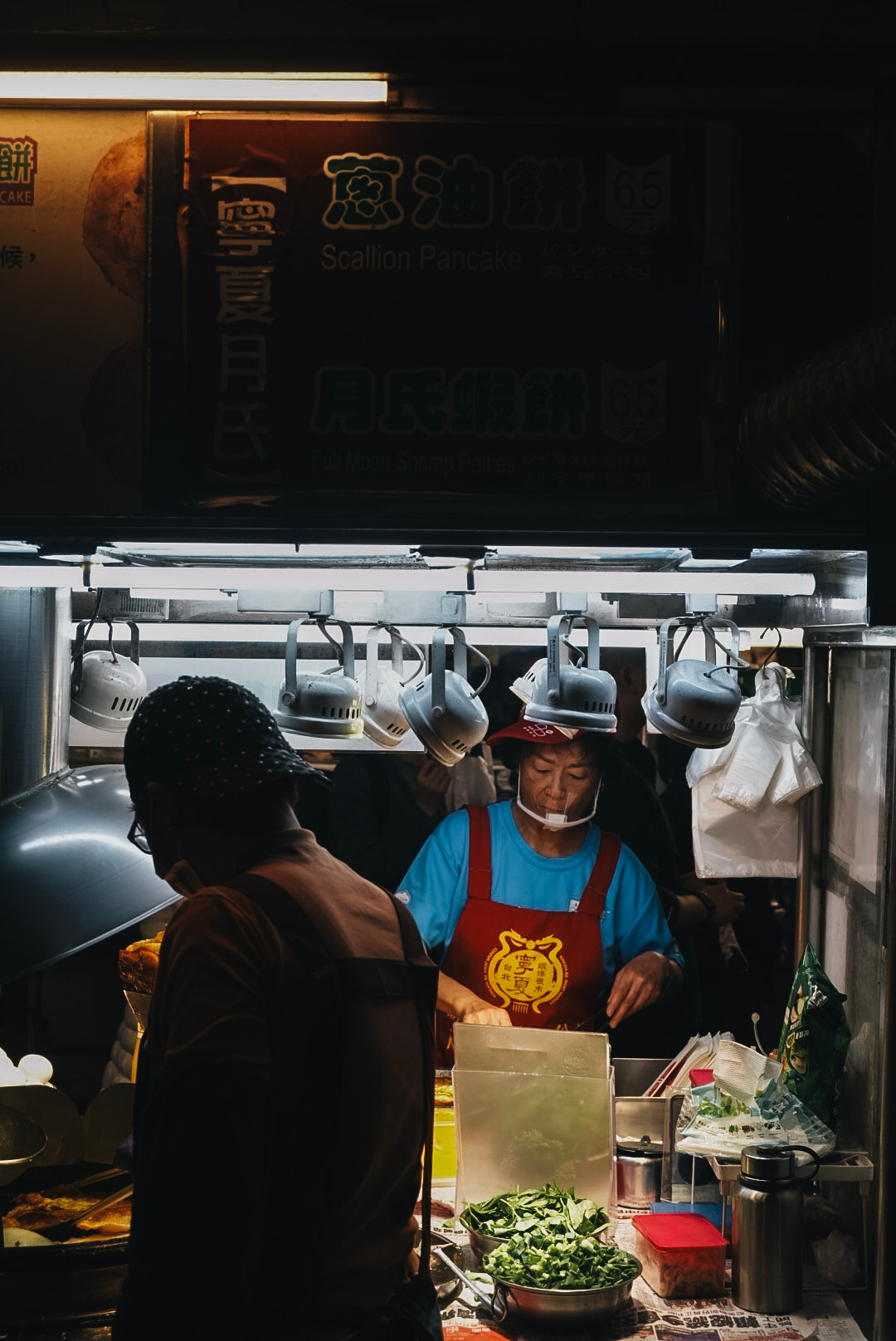
The classic foods include the oversized fried chicken cutlet, sausage wrapped in glutinous rice sausage, oyster omelette, pan-fried buns, stinky tofu, herbal rib soup, scallion pancakes and shaved ice. Good Friend Cold Noodles is one of the market’s best-known established stalls. Grilled king oyster mushrooms, roast sweet potato, fruit cups and aiyu jelly are easier options for vegetarians, although you should still ask about sauces and shared cooking surfaces.
Is Shilin too touristy? Yes, in parts. Is it still worth visiting? Also yes, if you understand what it is good at. It is the best Taipei night market for groups with mixed interests. One person can eat, another can shop, children can play games and everyone can sit down in the underground section when the humidity wins.
What Shilin does best: Scale and variety. It is more evening entertainment district than single food street.
The drawback: It can feel commercial, the quality varies between stalls and it is easy to walk in circles. Save the stalls you specifically want on Google Maps before arriving.
4. Nanjichang Night Market: the best local food market in Taipei
Nanjichang is often translated as South Airport Night Market. No, you have not missed a small airport in the middle of Taipei. The name comes from an airfield that occupied the area during the Japanese colonial period, before Songshan Airport was built.
The market grew around nearby residential communities, which still explains its character. People come here to pick up dinner. Prices tend to be gentler than at the headline tourist markets, portions feel more meal-like and you will see fewer souvenir stalls.
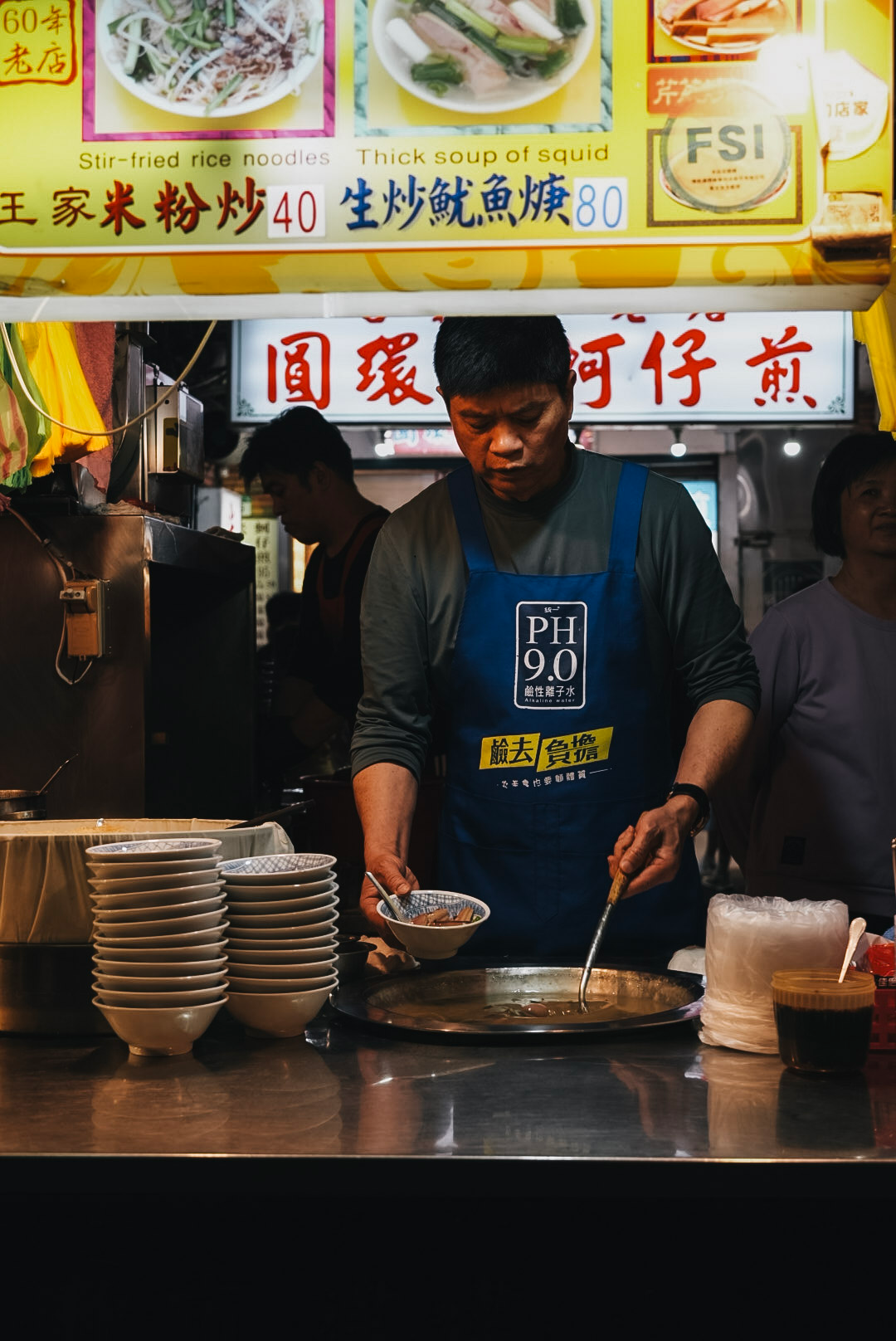
Come for steamed or fried dumplings, sesame flatbread, tube-shaped sticky rice, sesame-oil chicken, chicken rice, stinky tofu and old-fashioned sweet soups. The exact joy of Nanjichang is choosing a stall because there are ten local people waiting for it, then working out what it sells.
This is also one of the more useful night markets for vegetarians. You may find vegetable dumplings, tofu dishes and several sweet options, but do not assume all stinky tofu is vegetarian. The sauce, broth or pickled vegetables can contain animal ingredients. English is less widely used here, so keep the Chinese name of the dish or a translation card on your phone.
What Nanjichang does best: It feels like a neighbourhood food market that happens to be very good, not an attraction built around visitors.
The drawback: There is no MRT station immediately outside. The extra transfer is small, but it is less convenient than Raohe, Shilin, Gongguan or Jingmei.
5. Linjiang Street Night Market: the best night market near Taipei 101
Linjiang Street Night Market is also commonly called Tonghua Night Market, so do not be confused when both names appear in your research. It sits in a residential part of Da’an, roughly a 15 to 20-minute walk from Taipei 101 and much closer to Xinyi Anhe MRT.
The crowd here is a mix of office workers collecting dinner, neighbourhood residents and visitors who have walked over from Xinyi. It is lively without feeling as much like a major tourist stop as Shilin or Raohe.
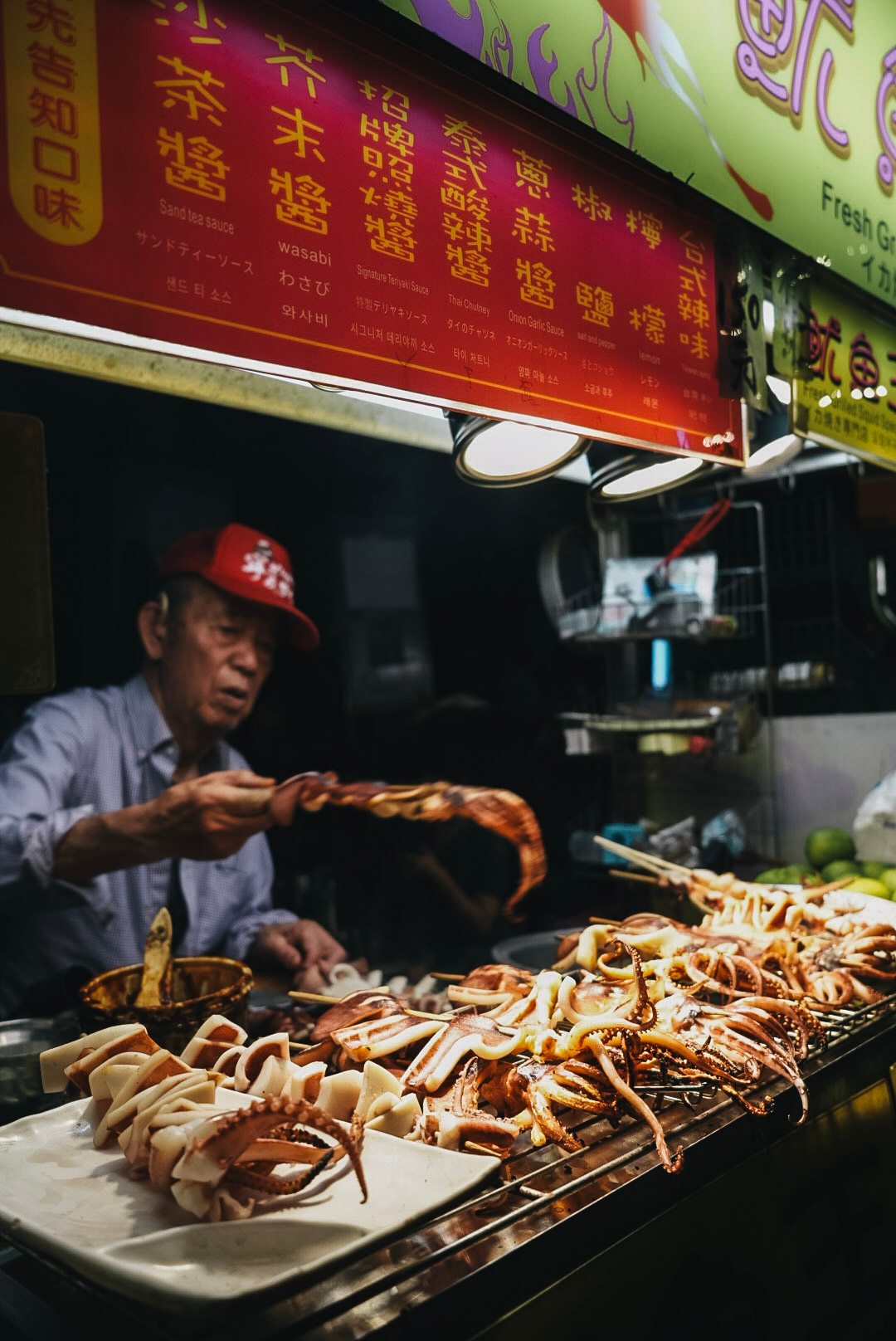
Food stalls sell fried chicken, pan-fried buns, rice and noodle dishes, Taiwanese sausages, braised foods, oyster omelettes, wheel cakes, sweet potato balls, fruit drinks and tangyuan. There are also clothing and household shops around the market, although food is still the main reason to come.
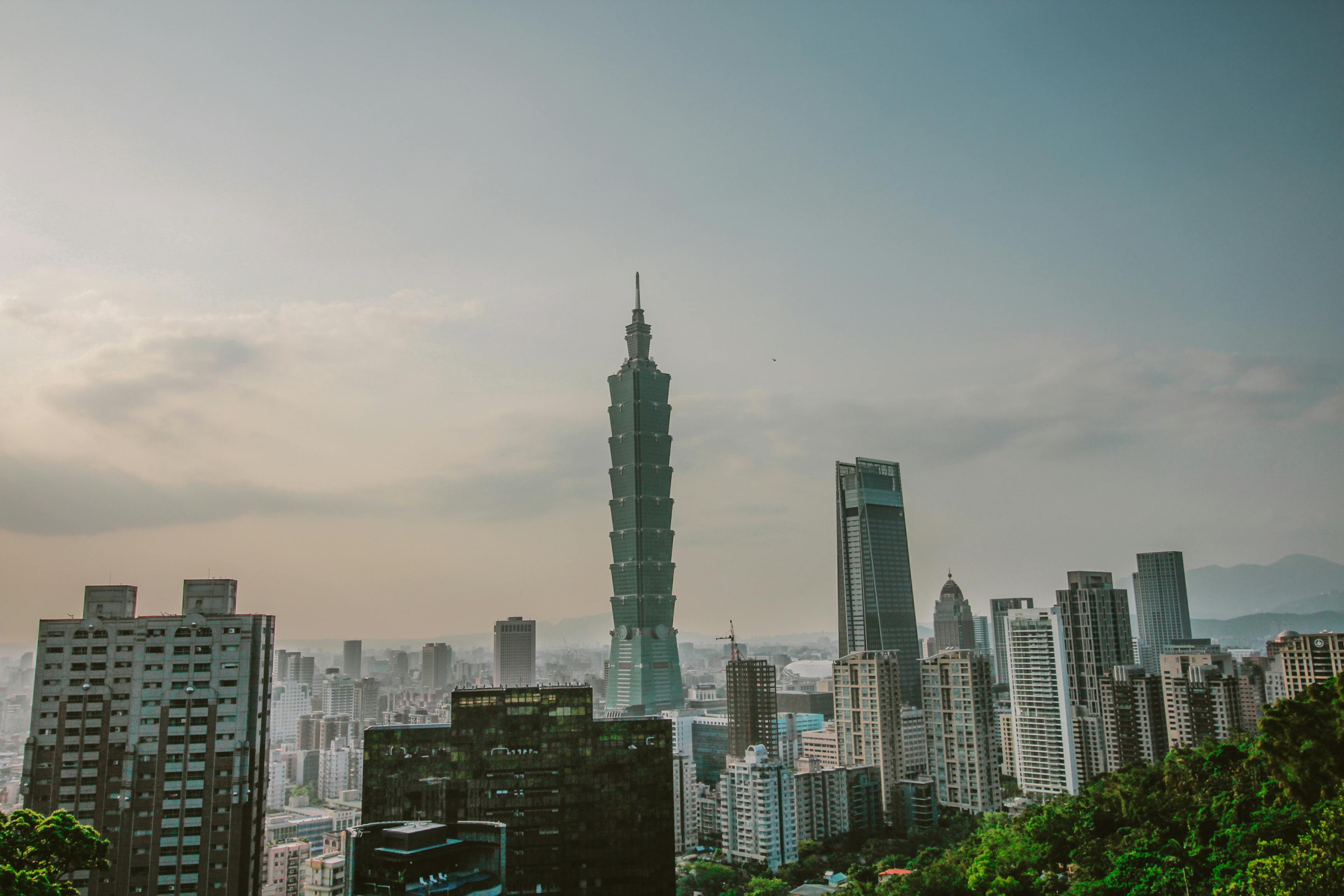
For the easiest evening plan, visit Taipei 101 or walk the Elephant Mountain trail before sunset, then finish with dinner at Linjiang. This saves you from crossing the city simply to tick off a famous market.
What Linjiang does best: Location. It is the sensible night market to attach to a Xinyi sightseeing day.
The drawback: It does not have one blockbuster speciality or landmark entrance. Come for a good neighbourhood market, not a dramatic reveal.
6. Gongguan Night Market: best for student prices, cafés and casual shopping
Gongguan sits beside National Taiwan University, and the student population shapes everything around it. Food needs to be quick, affordable and interesting enough to compete with the next stall. The result is less of a formal market and more of a busy grid of snack stalls, small restaurants, drink shops, sports stores, bookshops and cafés.
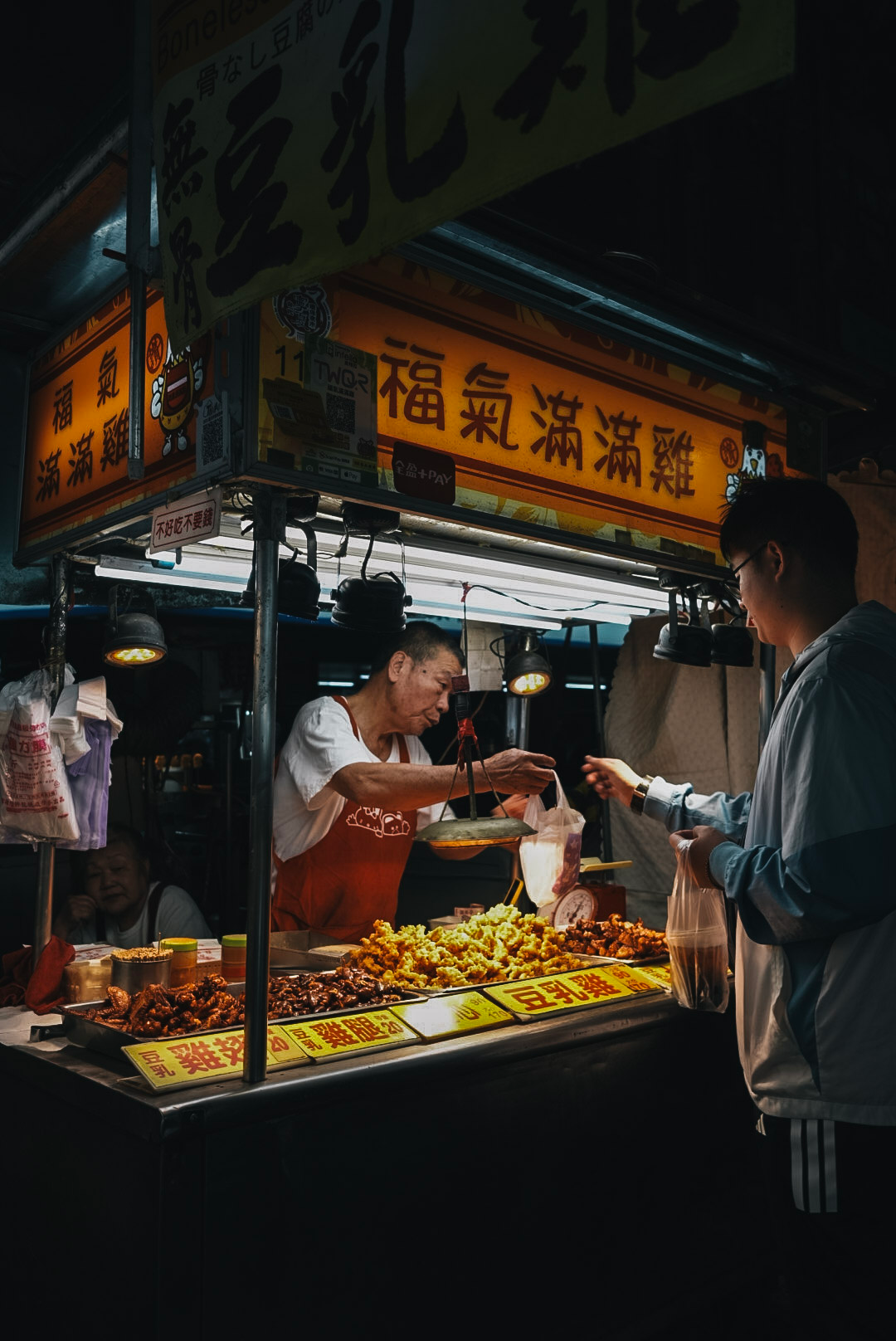
Look for flaky scallion pancakes, gua bao stuffed with braised pork, fried chicken, wheel cakes, dumplings, luwei braised snacks and brown-sugar drinks. The area also has more international food and café options than a traditional single-street night market, which helps when a group cannot agree on dinner.
Gongguan is a good choice if you have already visited Raohe or Ningxia and want to see a different version of Taipei after dark. Pair it with the National Taiwan University campus, Treasure Hill Artist Village or the riverside area earlier in the day.
What Gongguan does best: Affordable food and a youthful neighbourhood atmosphere, with plenty to do beyond the market stalls.
The drawback: It is dispersed across lanes and storefronts. If you expect one illuminated entrance gate, you may spend the first ten minutes wondering whether you are there yet.
7. Huaxi, Guangzhou and Wuzhou Street Night Markets: best for old Wanhua atmospher
Treat Huaxi, Guangzhou and Wuzhou as a connected Wanhua night-market cluster, not three separate expeditions. Guangzhou Street has open-air food and game stalls. Wuzhou Street is a short traditional food lane. Huaxi Street is partly covered and lined with old restaurants, massage shops and traces of the area’s former identity as “Snake Alley”. The nickname is now more historical than useful.
This part of the city feels older and rougher around the edges than Xinyi or Zhongshan. That is precisely why it is interesting. Visit Longshan Temple and Bopiliao Historic Block before dinner, then walk through the market streets as the lights come on.
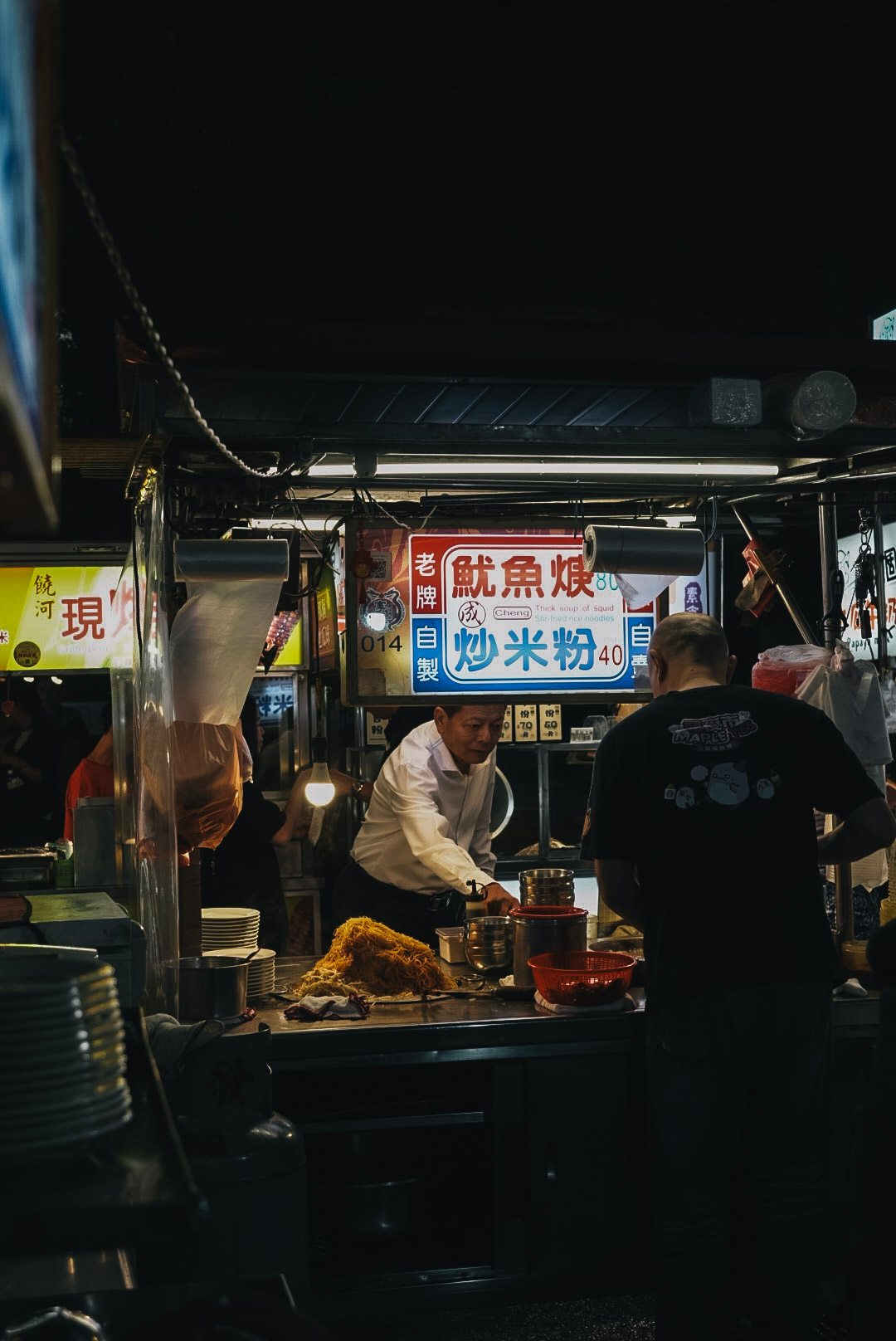
The food leans towards old-school sit-down dishes and herbal soups rather than only handheld snacks. Depending on the lane, you may find cuttlefish thick soup, rice cakes, seafood stews, braised dishes, glutinous-rice snacks, mochi and traditional desserts.
Huaxi is not my first recommendation for a visitor with only one night in Taipei. Raohe is easier and Ningxia is stronger as a concentrated food crawl. But Wanhua gives you history, temples, market culture and dinner in one walk. That combination is worth far more than another checklist of famous stalls.
What this area does best: Context. You see how temples, trading streets, residential life and night markets grew together.
The drawback: The area includes adult-oriented businesses and can feel seedier than Taipei’s polished shopping districts. It is not the best market cluster for every family, especially late at night.
8. Jingmei Night Market: best for a low-key neighbourhood evening
Jingmei is the market to choose when you have already done the famous three or happen to be staying in southern Taipei. It is a traditional neighbourhood market with food stalls mixed among shops selling clothes, shoes and household goods.
Popular foods include Shanghai-style buns, salty fried chicken, tofu pudding, sesame-oil chicken and angelica duck. Prices are generally local, English menus are less consistent and there is little pressure to photograph everything before eating it.
The nearby Jingmei River paths make this an easy slow evening. Walk or cycle before sunset, then enter the market hungry.
What Jingmei does best: Convenience and everyday atmosphere for travellers based in southern Taipei.
The drawback: It is not worth crossing the entire city for on a first, very short visit. It becomes more rewarding once you have already seen how Raohe, Ningxia or Shilin operate.
Other Taipei night markets worth knowing
Not every good evening food area needs a full place in your itinerary. These are useful alternatives depending on where you are staying.
Shida or Longquan Street Shopping Area: A compact student district around Shida Road and Longquan Street with affordable clothing, cafés and casual food. It is better understood as a shopping and eating neighbourhood than a giant traditional night market. Use Taipower Building MRT.
Liaoning Street Night Market: A very small central market near Nanjing Fuxing. It is more suitable for a sit-down seafood or stir-fry dinner than a long street-food crawl.
Shuangcheng Street Night Market: A convenient option near Zhongshan Elementary School MRT. Some vendors operate during the day, making it useful when your evening schedule is already full.
Ximending: Ximending has plenty of street food, restaurants and evening energy, but it is a pedestrian shopping district rather than one clearly defined night market. Enjoy it for what it is. Do not count it as your only Taipei night-market experience.
What to eat at Taipei night markets
You will see hundreds of options, but these are the Taiwanese night-market foods most first-time visitors look for.
Black pepper bun (hújiāo bǐng, 胡椒餅)
A crisp oven-baked bun filled with peppery pork and scallions. Raohe has the best-known version. It contains meat.
Oyster omelette (é’ā jiān, 蚵仔煎)
Oysters, egg, greens and starch batter cooked on a flat griddle and covered in sauce. The texture is intentionally soft and chewy, not like a Western omelette.
Stinky tofu (chòu dòufu, 臭豆腐)
Fermented tofu served fried, grilled or in a spicy broth. The fried version usually arrives with pickled cabbage. Vegetarians must still ask about broth, sauce and cooking fat.
Braised pork rice (lǔròu fàn, 滷肉飯)
A small bowl of rice topped with finely chopped braised pork. Order it as one part of a larger snack crawl, not as the only dish.
Taiwanese fried chicken (jīpái, 雞排)
A large chicken cutlet seasoned, fried and usually served whole in a paper sleeve. Shilin is famous for the enormous version, but you will find good stalls across Taipei.
Sausage wrapped in glutinous rice sausage (dàcháng bāo xiǎocháng, 大腸包小腸)
A Taiwanese pork sausage tucked inside a split sticky-rice sausage with pickles and sauce. The “large sausage” is made from rice; the smaller one is pork.
Gua bao (guàbāo, 刈包)
A soft steamed bun folded around braised pork belly, pickled mustard greens, peanuts and coriander. Gongguan is known for it.
Sweet potato and taro balls
Chewy, fried snacks that can be plain or filled. Check before ordering because some famous taro balls contain pork floss or salted egg yolk.
Aiyu jelly (àiyù, 愛玉)
A light jelly made from fig seeds and usually served with lemon and syrup. It is one of the most refreshing choices on a humid Taipei evening.
Tangyuan and mochi
Glutinous-rice sweets served hot, cold, filled or coated with ground peanut and sesame. These are useful desserts to share when everyone claims to be full and then immediately orders one more thing.
Vegetarian food at Taipei night markets
Taipei is an excellent city for vegetarian food. Its night markets are a little more complicated.
The problem is not a lack of vegetables or tofu. It is the ingredients you cannot see. A tofu dish may use meat broth. Greens may be cooked with lard. Sauce can contain oyster extract. Pickles can include dried shrimp. A stall may use the same oil or grill for everything.
Safer foods to investigate include grilled king oyster mushrooms, roasted sweet potato, corn, fruit, aiyu jelly, tofu pudding, mochi, plain sweet potato balls and some scallion pancakes. Ask for a scallion pancake without egg if you do not eat eggs. Wheel cakes and ice-cream desserts usually contain egg or dairy, so they are not automatically vegan.
You can show a vendor this sentence:
我吃素。請問這個有肉、魚、海鮮、豬油或肉湯嗎? |
If you are strictly vegan or have an allergy, eat a proper meal at a dedicated vegetarian restaurant and treat the night market as a dessert and snack stop. It is much more enjoyable than interrogating every frying pan while hungry.
How much do Taipei night markets cost?
Most small snacks cost roughly NT$50 to NT$150, while large seafood dishes, shaved-ice bowls or sit-down plates can cost more. A budget of NT$400 to NT$700 per person is comfortable for several shared snacks and a drink. You can spend less if you choose filling dishes, or considerably more if grilled seafood gets involved.
Cash is still the most reliable way to pay. Some permanent stores accept cards or local mobile payments, but small food stalls often do not. Carry NT$100 notes and coins rather than expecting a vendor to break a NT$1,000 note for one sweet potato ball.
Best time to visit Taipei night markets
The best time to arrive is between 5:30 PM and 6:30 PM on a weekday. Enough stalls will be open for dinner, but the market may not yet be packed. From about 7:00 PM to 9:30 PM, Raohe, Ningxia and Shilin can become very crowded.
Arriving at the advertised opening time does not guarantee every stall will be ready. Night markets are collections of independent businesses, not malls with one set of shutters. Give the vendors 30 to 60 minutes after the official opening if you want the widest choice.
Late visits can also work. Crowds thin after 10:00 PM, but popular stalls may sell out and smaller vendors may already be packing up.
Practical tips for visiting Taipei night markets
Walk through once before buying everything
The first smell will convince you to order immediately. Resist for five minutes. Scan the market, save the things you genuinely want and then loop back. This is particularly useful at Raohe and Ningxia, where several queues appear before you can see what is beyond them.
Share food
Night-market hunger is not normal hunger. It is the unreasonable belief that you can eat nine things because each one is “just a snack”. Go with someone, order one portion at a time and share.
Bring cash and a small rubbish bag
Public bins are less common than many visitors expect. Some stalls will take back packaging from food bought there, and larger markets have collection points, but keep your rubbish with you until you find the correct bin.
Follow the queue
Queues in Taiwan are usually orderly even when the surrounding lane looks chaotic. Find the end before joining and do not block the neighbouring stall while deciding.
Do not eat or drink after entering the MRT paid area
Finish your bubble tea before crossing the yellow line at the station gate. Taipei Metro prohibits eating, drinking and chewing gum inside the paid area, including platforms and trains.
Use a poncho on wet evenings
Night markets often continue in light rain, but an open umbrella is awkward in a narrow crowd. A light rain jacket or poncho is easier. Outdoor stalls may close during severe weather or typhoon warnings, so check local notices before leaving your hotel.
Save the market name in Chinese
This is particularly useful for Nanjichang, smaller stalls and taxi rides. Google Maps pins in English are generally reliable, but a screenshot of the Traditional Chinese name removes guesswork.
Be realistic about strollers and accessibility
Shilin’s wider area and underground food court make it the most practical of the major markets for families, although its lanes still get packed. Raohe and Ningxia are narrow at peak time. Wheelchair users will find permanent shops easier than temporary stalls because kerbs, crowds and uneven surfaces vary.
Frequently asked questions about Taipei night markets
Are Taipei night markets vegetarian-friendly?
Vegetarian snacks are available, but night markets require careful checking. Meat stock, lard, oyster sauce and shared cooking equipment are common. Dedicated vegetarian restaurants are a safer option for strict vegans and travellers with allergies.
Do Taipei night markets accept credit cards?
Some permanent shops do, but cash remains the most dependable payment method for street-food stalls. Bring small notes and coins.
Are Taipei night markets safe for solo travellers?
They are generally busy, well-lit places used by locals of all ages. Keep normal control of your phone and wallet in crowds, watch for hot grills and scooters around market edges, and use the MRT for an easy journey back.
Can I visit two night markets in one evening?
You can, but it rarely improves the experience. One market plus a nearby temple, neighbourhood walk or riverside stop makes a better evening than rushing between two similar food streets.
Is Ximending a night market?
Not exactly. Ximending is a pedestrian shopping and entertainment district with abundant street food, shops and restaurants. It is lively at night, but it does not replace a visit to a defined market such as Raohe, Ningxia or Shilin.